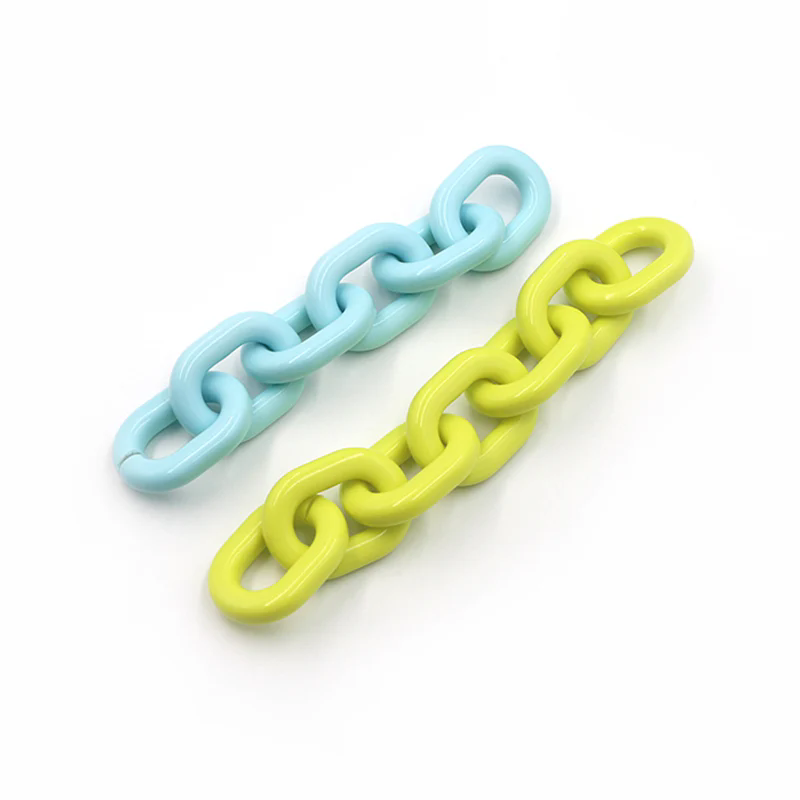
Most bags enter a wardrobe as a complete thought: silhouette, hardware, and strap already decided. The accessory that changes that equation is the chain. A vivid, sculptural chain does not simply hang from a bag; it edits the bag’s mood, shifts its proportion, and makes an ordinary object feel considered. The Blue Lemon Irion Colored Bag Chain sits precisely at that intersection of function and visual rhythm, using two saturated colors and a polished acetate body to turn a supporting accessory into a deliberate style signal.
Abstract
This article examines how colored acetate bag chains influence the visual character of a bag, with close attention to material behavior, color theory, attachment mechanics, and real-world styling contexts. It separates decorative appeal from practical wearability, offers a structured styling framework for different bag shapes and outfit moods, and answers common questions about care, durability, and compatibility. The aim is not to prescribe one look, but to show why a chain with a clear color identity deserves a deliberate place in an accessory rotation.
Why the Bag Chain Became a Style Tool
A bag chain is a small object with disproportionate influence. It sits at eye level, moves with the body, and introduces a second material and a second color into an otherwise closed visual system. That is why a well-chosen chain can make a plain tote feel intentional and an evening clutch feel less formal. The accessory has moved from hardware replacement to styling device, and the reason is structural: a chain changes both what the bag looks like and how the bag is carried.
Contemporary bag styling has embraced layered, expressive hardware with unusual clarity. Oversized embellishments, draped chains, and color-forward links have become part of everyday dressing rather than runway-only gestures[reference:0]. The chain is no longer expected to disappear into the bag. It is expected to contribute. Acetate, in particular, has become a favored material for this contribution because it can hold intense color, accept fine polishing, and remain light enough for small bags and long wearing periods[reference:1].
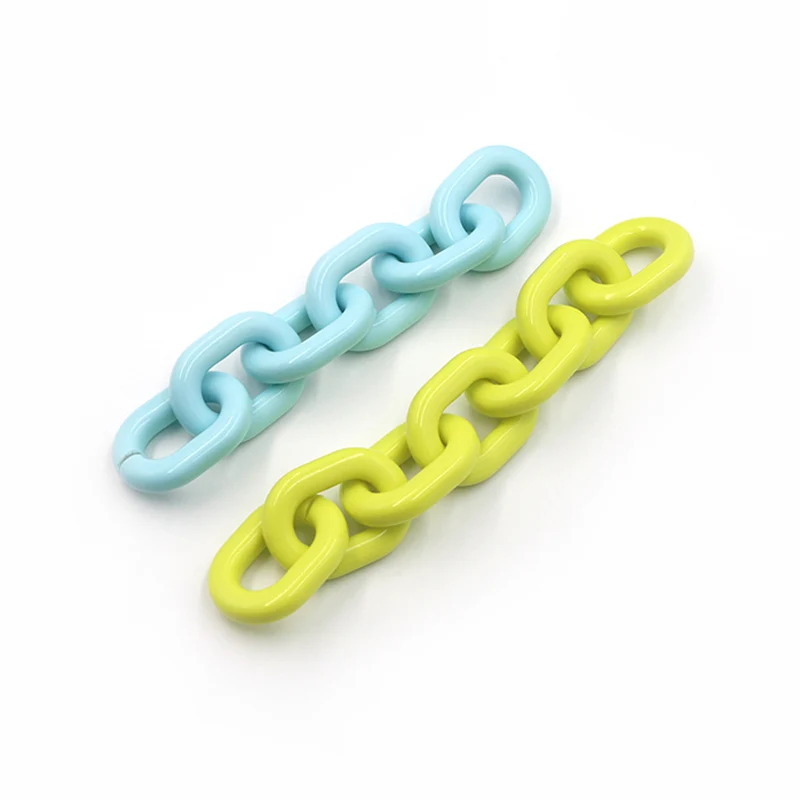
The Blue Lemon Irion Colored Bag Chain belongs to this movement without imitating it. Its identity is built on two specific colors—a clear, airy blue and a bright lemon yellow—joined by a compact, carefully finished acetate link. The chain does not rely on charms or mixed-media layering to hold attention. Its visual argument is simpler: color, repetition, and a smooth, confident silhouette.
- Visual function: introduces contrast, rhythm, and a focal point at the bag’s top line.
- Practical function: provides a hand-carry option, a short shoulder drop, or a decorative extender.
- Stylistic function: shifts the perceived formality of a bag without requiring a new bag purchase.
Acetate as a Material for Daily Wear
Acetate is often described in terms of what it is not: not metal, not resin, not leather. That framing misses the point. Acetate is a cellulose-based material that can be colored through the body rather than coated on the surface, which means the color does not sit on top of the link waiting to wear away. For a colored bag chain, this matters because the visual appeal depends on color continuity across dozens of individual links. A surface coating would fail at the edges and joints first; a body-colored acetate keeps its tone through polishing and repeated handling[reference:2].
The material also has a useful weight profile. All-metal chains can pull on small crossbody bags, distorting the bag’s shape and straining the attachment points over time. Acetate links are substantially lighter while still maintaining a solid, tactile presence. The result is a chain that feels substantial in the hand without behaving like a counterweight on the bag[reference:3]. For daily use, that difference is not cosmetic; it affects how the bag hangs, how the shoulder feels after an hour, and whether the hardware remains aligned.
Finish quality determines whether acetate feels premium or provisional. Edges should be rounded and free of sharp burrs that could catch fabric or mark leather. The connection points between links should be tight enough to prevent rattling but smooth enough to allow natural movement. Color should be uniform from link to link, with no cloudy patches or uneven distribution. These details are not visible in a single photograph, but they become obvious in use—and they are exactly the details that separate a durable accessory from a short-lived one.
| Attribute | Acetate Chain | Metal Chain | Fabric or Cord Strap |
|---|---|---|---|
| Weight | Light to moderate | Often heavy | Very light |
| Color range | Broad, body-colored | Limited to plating | Dependent on weave |
| Surface interaction with leather | Smooth, low abrasion | Can scratch or mark | Soft, generally safe |
| Structural memory | Holds shape, resists kinking | Can bend or tangle | Can stretch or crease |
| Visual character | Sculptural, color-forward | Jewelry-like, reflective | Soft, textural |
Reading the Blue and Lemon Color Pairing
Color is the first thing a chain communicates and the last thing a viewer forgets. The blue-and-lemon pairing used in the Blue Lemon Irion Colored Bag Chain is not a random combination. It sets a cool, airy tone against a warm, citrus-bright tone, producing a contrast that is lively without becoming chaotic. The blue reads as calm and slightly aquatic; the lemon reads as energy and daylight. Together, they create a visual push-pull that keeps the eye moving along the chain rather than settling on a single link.
This pairing also has practical styling advantages. Blue and yellow are close enough to feel intentional but far enough apart to register as two distinct colors at a glance. That means the chain can be used to echo an existing color in an outfit—a blue denim jacket, a pale yellow knit, a lemon-print scarf—or to introduce a controlled contrast against neutrals. A black bag, a cream canvas tote, or a grey wool coat provides a quiet ground that allows the chain’s color identity to emerge clearly.
Three color behaviors to understand before styling
- Echo: pull one chain color into another part of the outfit—a blue shoe, a yellow bag charm, a lemon-toned nail—to make the chain feel integrated rather than attached.
- Contrast: place the chain against a neutral or dark bag so the two colors do the work without competition from a patterned surface.
- Balance: if the outfit already contains strong color, let the chain be the only accessory with a second strong color; avoid matching both chain colors elsewhere at the same visual weight.
The chain’s color rhythm is also affected by link size and curvature. Smaller, tighter links produce a denser color field; larger, more open links allow the bag surface to show through and reduce the intensity of the color statement. The Blue Lemon Irion chain’s proportions sit in a middle range: visible enough to register as a color object, restrained enough to avoid overwhelming a small bag. That balance is what makes it adaptable across casual and polished contexts.
A Styling Framework for Different Bags
Not every bag benefits from the same chain treatment. The most reliable approach is to consider three variables together: bag structure, bag color, and the distance between the bag’s handle and the wearer’s body. A structured bag with a top handle has a different relationship to a chain than a soft shoulder bag or a small clutch.
Structured top-handle bags
A structured bag already has a clear architectural line. Adding a colored chain can either reinforce that line or interrupt it. The safer choice is to attach the chain from one handle to the other in a shallow drape, letting it sit against the bag’s front panel rather than swinging freely. This placement treats the chain as a visual bridge and keeps the bag’s silhouette legible. If the bag is dark or neutral, the chain becomes the primary color event; if the bag is already colored, choose a chain placement that touches only one edge of the bag’s face to avoid color crowding.
Soft shoulder bags and hobos
Soft bags benefit from the chain’s structure. A polished acetate chain adds a crisp, linear element to a slouchy body, creating contrast between relaxed leather and precise hardware. Attach the chain at the bag’s D-rings and allow a slightly longer drop so the chain moves independently from the bag’s main strap. This layering effect is one of the most current ways to style a chain: the bag keeps its casual attitude, while the chain introduces a deliberate, jewelry-like detail[reference:4].
Mini bags and clutches
Small bags are where a colored chain has the greatest proportional impact. A chain that would be a quiet detail on a large tote becomes a defining element on a mini bag. Use the chain as a wrist carry or a short decorative extender rather than a long shoulder strap. The goal is to keep the bag close to the body and let the chain’s color and shine read at close range. A lemon-and-blue chain against a white mini bag, a black clutch, or a nude leather pouch creates a clear focal point without requiring additional charms or scarves.
Placement principle: A chain should either follow the bag’s existing line or deliberately cross it. Placement that accidentally falls between those two intentions tends to look unresolved. Decide whether the chain is a frame, a bridge, or a drop—then commit to that role.
Scenario-Based Combinations
Styling becomes easier when the context is specific. The following combinations are not formulas; they are starting points for matching the chain’s color energy to the visual temperature of an outfit.
Spring daytime: fresh dresses and light layers
A pale blue dress, a white cotton shirt, or a lemon-toned knit each gives the chain a natural color echo. Keep the bag simple—cream canvas, white leather, or a light woven texture—and let the chain provide the only saturated accent. The blue links pick up cool tones in the outfit; the lemon links add warmth without making the look feel autumnal. This is the chain’s most intuitive context because the color story is already present in the clothing.
Workwear: structured tailoring with a controlled accent
A navy blazer, grey trousers, and a black leather bag can feel severe without an accessory that introduces levity. Attach the chain to a structured bag in a short drape and let it sit against the bag’s front. The blue reads as professional and composed; the lemon adds a small, deliberate disruption. The key is proportion: a short chain drop keeps the accessory within the bag’s visual boundary, so it reads as a considered detail rather than a playful intrusion.
Evening: small bags and high-contrast surfaces
A mini bag in black, ivory, or deep green becomes a canvas for the chain’s color contrast. Use the chain as a wrist strap or a short shoulder drop, and keep other accessories minimal. The acetate’s polished surface catches light in a way that reads as jewelry-adjacent without mimicking metal. For an evening context, the chain’s role is to add a point of color and shine while preserving the bag’s compact proportions.
Travel and errands: durable color with low maintenance
A nylon crossbody, a canvas tote, or a soft leather hobo benefits from a chain that is light, smooth, and easy to wipe clean. Acetate’s non-porous surface resists absorption and can be cleaned with a soft, damp cloth. The chain’s color also serves a practical purpose in a busy environment: it makes the bag easier to identify and adds a deliberate finish to an otherwise utilitarian carry.
| Context | Bag Type | Chain Placement | Color Logic |
|---|---|---|---|
| Spring daytime | Canvas tote or light leather shoulder bag | Short drape between handles | Echo blue or yellow from clothing |
| Workwear | Structured top-handle bag | Front-facing shallow bridge | Controlled contrast against dark tailoring |
| Evening | Mini bag or clutch | Wrist carry or short drop | High contrast against neutral or jewel-tone bag |
| Travel and errands | Nylon crossbody or soft hobo | Layered beside existing strap | Functional color identification |
Care, Storage, and Longevity
An acetate chain is not fragile, but it is not indestructible. The two failure points to watch are the link joints and the clasp connections. Daily use puts repeated stress on the points where the chain attaches to the bag, so those connections should be inspected periodically for looseness or unusual wear. A chain that swings freely and is regularly clipped and unclipped will experience more wear at the clasps than at the links themselves.
Cleaning should be simple: a soft, slightly damp cloth passed over the links, followed by a dry cloth. Avoid abrasive cleaners, solvents, and prolonged soaking. Acetate can be sensitive to certain chemicals, and harsh cleaning agents may dull the surface or affect the color over time. For storage, keep the chain flat or loosely coiled rather than compressed under heavy objects. A small pouch or a divided compartment prevents links from rubbing against sharper hardware in a bag or drawer.
- Wipe the chain after frequent use to remove skin oils and environmental residue.
- Inspect clasps and link joints monthly if the chain is used daily.
- Store loosely coiled or flat; avoid tight bending that stresses individual links.
- Keep away from prolonged direct heat and solvent-based products.
- Remove the chain before cleaning the bag with leather treatments or chemical sprays.
The chain’s longevity also depends on how it is used. A chain that is treated as a permanent part of the bag will accumulate more wear than one that is swapped between bags and stored properly between uses. Rotating the chain across different bags is not only a styling strategy; it is also a way to distribute stress and extend the accessory’s usable life.
Frequently Asked Questions
These are the questions that come up most often when a colored acetate chain enters a wardrobe for the first time. The answers focus on practical use rather than abstract styling theory.
Will an acetate chain scratch a leather bag?
Acetate links are typically polished to a smooth finish, which reduces the risk of abrasion compared with metal hardware. However, any rigid object can mark soft leather if it is pressed against the surface for a long period or subjected to friction. The safest approach is to ensure the links are smooth, avoid trapping the chain between the bag and the body for extended wear, and inspect the chain for rough edges before first use.
Can the chain be used on a bag with very small D-rings?
Compatibility depends on the clasp size rather than the chain’s overall dimensions. A compact swivel clasp can usually pass through a standard D-ring, but very small or decorative rings may require an additional O-ring or adapter. Check that the clasp closes securely and that the chain can rotate freely without twisting the bag’s attachment point.
Is a two-color chain harder to style than a single-color chain?
It can be more directive, but that is not the same as harder. A single-color chain blends into a wider range of outfits; a two-color chain asks the wearer to make a clearer choice. The blue-and-lemon pairing is versatile because both colors can act as an echo or as a contrast. The easiest method is to let one color repeat in the outfit and allow the other to function as the accent.
Does the chain work on a bag that already has a patterned surface?
A patterned bag can work with a colored chain if the chain’s colors are already present in the pattern or if the pattern is low-contrast and tonal. A busy, high-contrast print with no blue or yellow will compete with the chain and make both look unresolved. In that case, a solid or neutral bag is a more stable ground for the accessory.
How should the chain be stored when not in use?
Store it flat or loosely coiled in a soft pouch or a compartment that prevents contact with sharp metal hardware. Avoid hanging the chain from a single point for long periods, which can stress one link or clasp. If the chain becomes damp, dry it with a soft cloth before storing to prevent moisture from sitting in the joints.
Design a Chain That Fits Your Bag Line
ELITE works with accessory lines that need a clear color identity, consistent link quality, and attachment details that match real bag hardware. If the blue-and-lemon direction is close to what your collection needs—or if you have a different color pairing in mind—Blue Lemon Irion Colored Bag Chain can be adapted in color, link proportion, and clasp specification.
Contact us to describe your bag dimensions, attachment points, and target color story. A short design conversation is usually enough to determine whether the current chain specification fits or whether a custom adjustment is the more practical route.
Contact Us to Discuss Your Chain Specification